
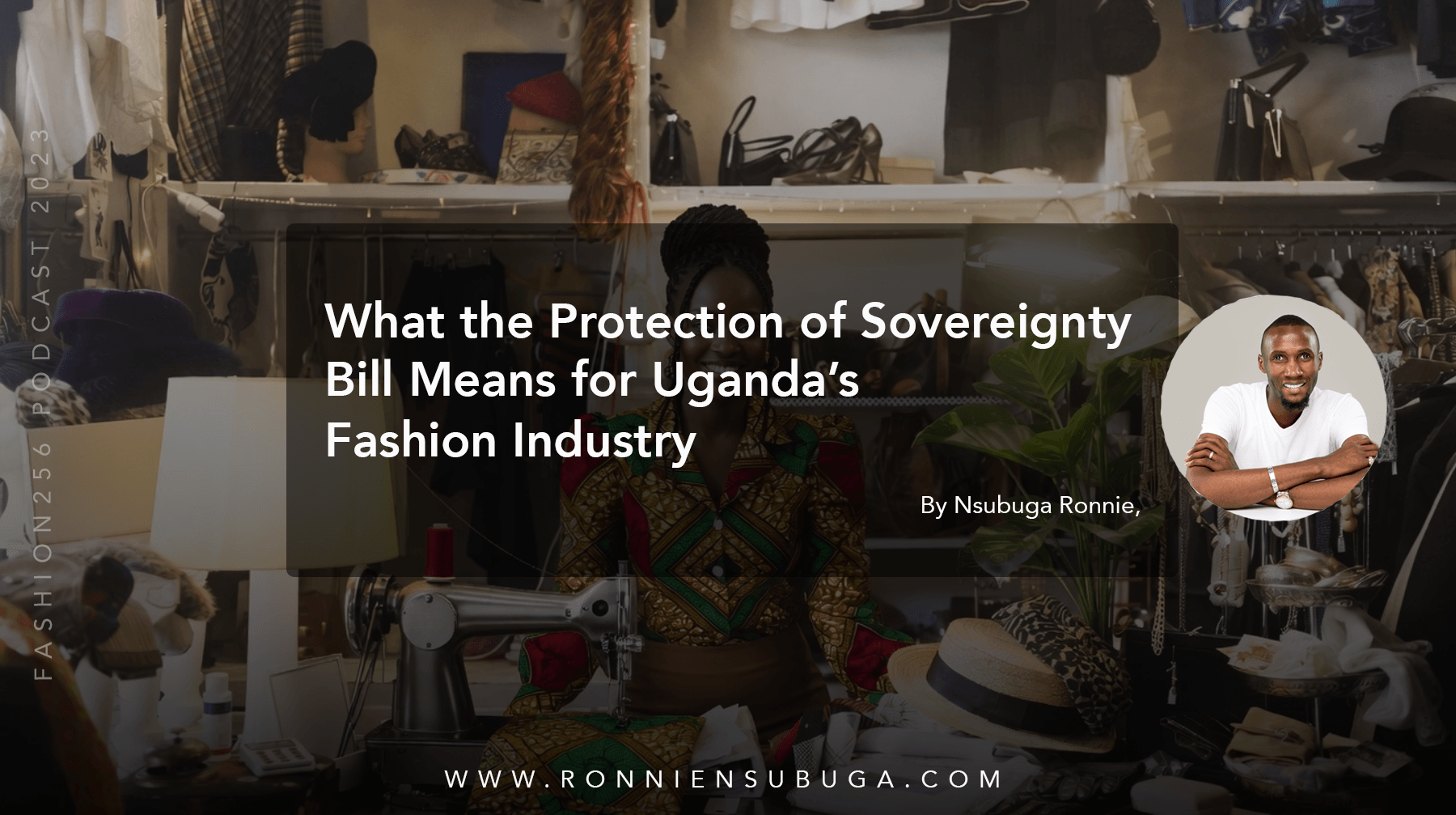
How the Sovereignty Bill Could Affect Uganda’s Fashion Industry
Most Ugandans think the Protection of Sovereignty Bill, 2026 is about politics or national security.
But here’s the reality:
If you are a fashion designer, model, stylist, or creative entrepreneur, this Bill could directly affect how you work, earn, and grow your business.
In this article, we break it down in simple terms
The Bill introduces the idea of an “agent of a foreigner.” In simple language, this could include:
- A fashion designer working with international buyers
- A model signed to an agency with foreign clients
- A fashion brand receiving funding or sponsorship from outside Uganda
- A fashion school supported by international partners
- Even creatives supported by Ugandans in the diaspora
This means many people in the fashion industry may be required to:
- Register with the government
- Declare their sources of funding
- Seek approval for certain activities
Uganda’s fashion industry is still growing. Most of our growth depends on:
- International markets
- Fashion shows and collaborations abroad
- Sponsorships and partnerships
- Learning and exposure from global platforms
If access to these opportunities becomes more restricted or heavily regulated, it could:
- Slow down business growth
- Reduce opportunities for young creatives
- Make it harder for Ugandan brands to compete globally
This is not about opposing the Bill. Protecting Uganda’s sovereignty is important.
But the concern is this:
Could some parts of the law unintentionally make it harder for creative industries like fashion to grow?
For example:
- If approvals take too long, opportunities may be lost
- If processes are too complex, small businesses may struggle
- If international collaboration is limited, innovation may reduce
Fashion is not just about clothes.
It is:
- A source of income for thousands of young people
- A growing business sector
- A way of promoting Ugandan culture globally
- A pathway for exports and tourism
If supported well, fashion can become a strong part of Uganda’s economy.
As stakeholders in the industry, we believe there is room for balance.
We can:
- Protect national interests
- While still supporting business growth and creativity
This requires:
- Clear guidelines for creative industries
- Practical systems that do not overburden small businesses
- Open dialogue between government and industry players
Through the Pearl of Africa Fashion Alliance, we are committed to engaging constructively with policymakers, industry players, and partners.
Our goal is simple:
To ensure Uganda builds a fashion industry that is both protected and globally competitive.
Uganda’s creative future depends on the decisions we make today.
Let’s get this right.
Nsubuga Ronnie is a fashion entrepreneur and Founder of the Pearl of Africa Fashion Alliance (PAFA), working to position Uganda as a globally competitive fashion hub.
3.png)

1.jpg)
.jpg)