
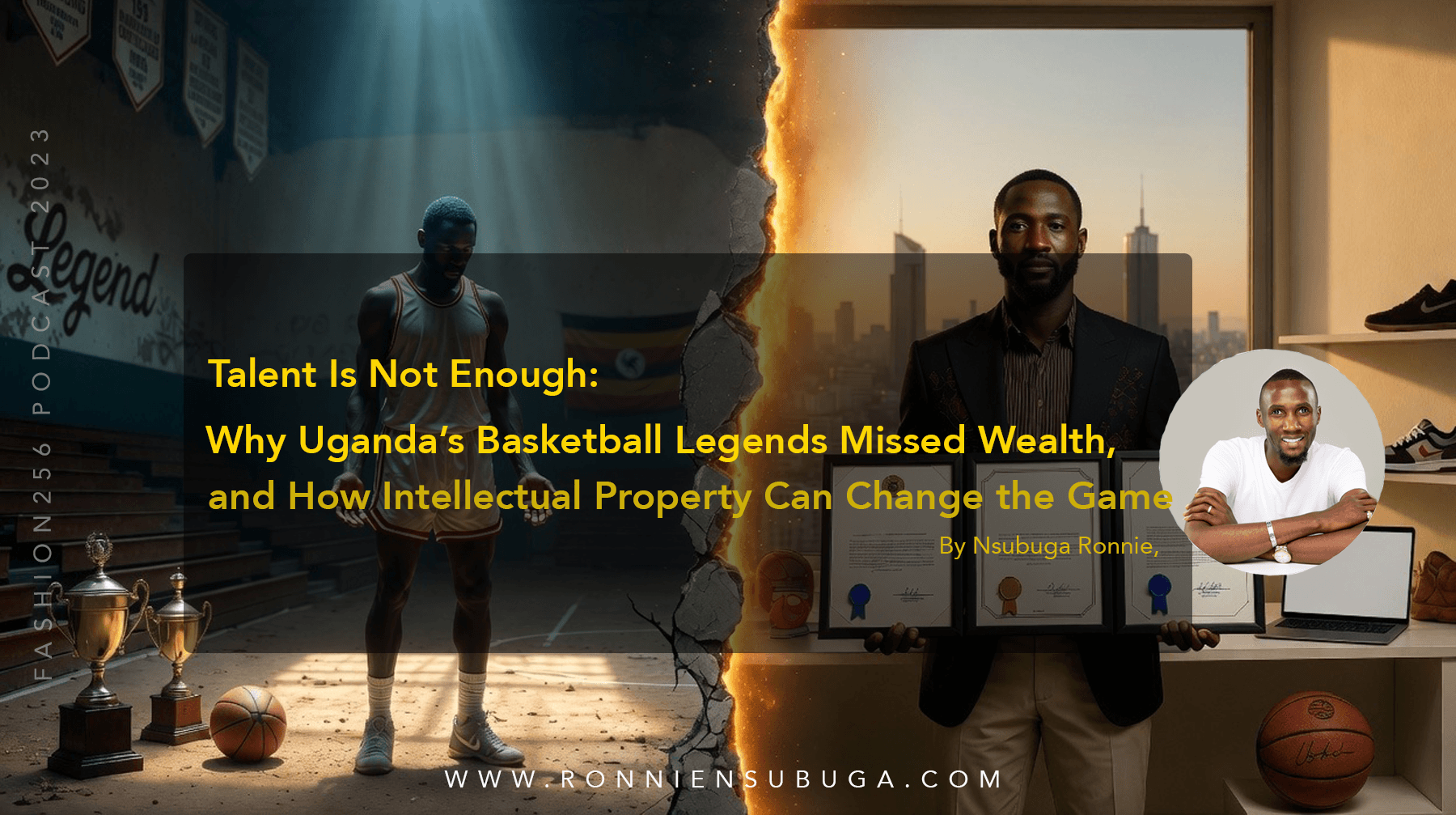
Talent Is Not Enough: Why Uganda’s Basketball Legends Missed Wealth, and How Intellectual Property Can Change the Game
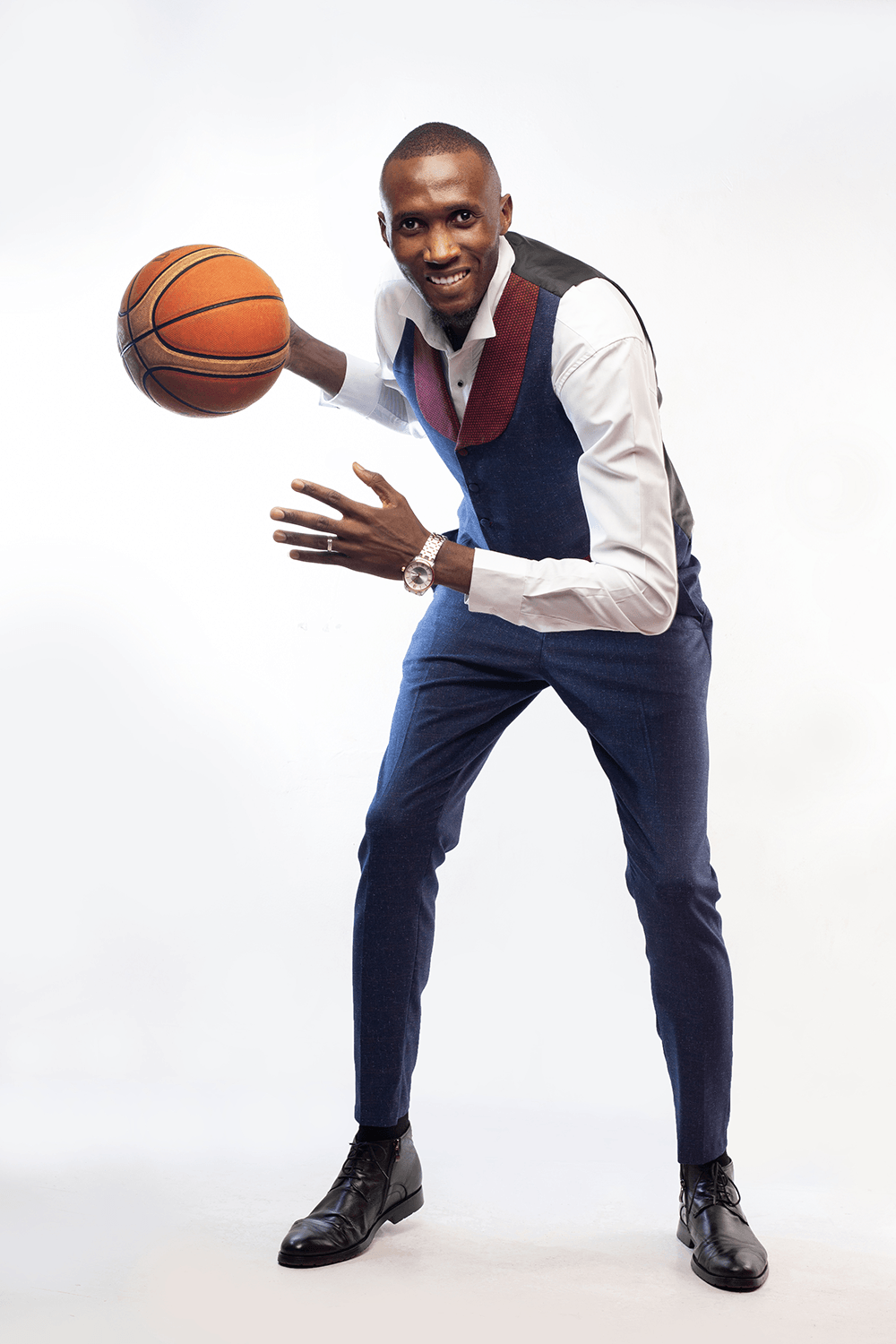
As a former professional basketball player with the Miracle Eagles, I lived the game.
I understood the discipline, the sacrifice, the identity that comes with stepping onto the court. Basketball was not just sport, it was culture, community, and, for many of us, a dream of building something bigger than ourselves.
I played alongside, and looked up to, legends like Norman Blick, Stephen Omony, the Enabu brothers, Vincent Chatti, Henry Malinga, Ben Komakech, Joseph Ikong and Isaac Afidra, men who defined eras, inspired fans, and elevated Ugandan basketball.
Yet today, we must confront an uncomfortable truth:
Why are these legends not among the richest athletes in Uganda?
After retiring, I transitioned into fashion entrepreneurship and intellectual property advocacy. That journey exposed something most athletes are never taught:
Talent builds fame. Intellectual property builds wealth.
World IP Day: Ready, Set, Innovate—or Be Left Behind
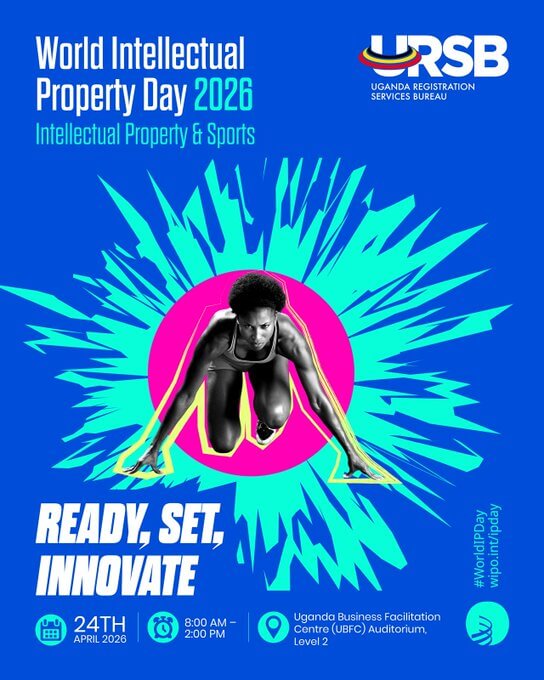
As we approach World Intellectual Property Day (April 26, 2026), under the theme “Ready, Set, Innovate,” the question for Ugandan athletes is no longer whether they are talented, but whether they are prepared.We celebrate Uganda’s Day on the Friday 24th April 2026
Because in today’s economy:
- Ready means understanding that your name, your image, and your identity are assets.
- Set means taking action to legally protect those assets.
- Innovate means turning that protection into income, ownership, and long-term wealth.
Through the leadership of the Uganda Registration Services Bureau, this theme challenges creators across industries.
But for athletes, it exposes a hard truth:
Ugandan sports has produced talent, but not ownership.
The Hard Question Ugandan Sports Avoids
Let’s stop romanticizing this.
If talent alone created wealth, Uganda’s basketball legends would be millionaires.
They had:
- Fame
- Influence
- Fan loyalty
- Cultural impact
But they were never truly ready, not because they lacked intelligence, but because the system never taught them that intellectual property was part of the game.
What they did not have was ownership:
- No trademarks
- No licensing structures
- No image rights frameworks
- No monetization strategy
So their value stayed in the moment, never translating into long-term economic power.
That’s not bad luck.
That’s a system failure.
Two Simple Ugandan Scenarios (That Are Already Happening)
Scenario 1: The Nickname That Built a Brand—For Someone Else
A Ugandan basketball player becomes famous nationwide as “Kikankanne.”
Fans chant it in arenas. Commentators use it. It becomes his identity.
But he never registers it. Years after retirement, a sportswear company launches:
- “Kikankanne” hoodies
- “Kikankanne” sneakers
- A logo inspired by his signature hand gesture
They make money.
He makes nothing.
What went wrong?
He never trademarked his nickname.
He built a brand. But he didn’t own it.
Scenario 2: The Celebration That Went Viral—Without Ownership
Another player creates a unique three-point celebration dance.
It spreads:
- Across Uganda
- Into East Africa
- Across TikTok and Instagram
Soon:
- Other players copy it
- Brands use it in adverts
- It appears in a music video
He is never credited.
He is never paid.
Because again, he was not set.
No copyright protection.
No licensing of image rights.
He created culture.
But culture without ownership is exploitation.
What Is Intellectual Property for an Athlete? (Simple, Practical Breakdown)
Let’s remove the legal jargon.
For an athlete, IP is about owning what makes you valuable beyond performance.
1. Trademarks
- Your name
- Your nickname
- Your logo
- Your signature phrases
Example: “Kikankanne” could be a registered brand.
2. Copyright
- Your celebration moves
- Your content (videos, photos)
- Your personal storytelling
Yes—even a dance can be protected.
3. Image Rights
- Your face
- Your likeness
- Your identity in media and advertising
This is what brands actually pay for.
4. Licensing
This is where money comes in.
You allow others to use your brand—for a fee:
- Merchandise
- Endorsements
- Media appearances
- Digital content
No license = no control = no money.
Does FUBA Respect Intellectual Property?
Let’s be honest.
Federation of Uganda Basketball Associations has played a critical role in growing the game.
But when it comes to intellectual property:
There is no visible, structured system protecting player IP rights.
There is:
- No clear image rights framework
- No standardized licensing system
- No consistent IP education for athletes
- No enforcement against misuse
So players unknowingly give away value every time:
- Their images are used without contracts
- Their identities are commercialized informally
- Their brands are exploited without compensation
That is not governance.
That is a gap that must be addressed.
Why Uganda’s Basketball Legends Are Not Among the Richest
Let’s break it down brutally:
- No Ownership Structures
They were brands—but never formalized as businesses. - No IP Awareness
No one taught them that their name had legal and financial value. - No Institutional Support
Federations focused on competition—not commercial empowerment. - Short-Term Thinking
Careers ended before monetization strategies began. - No Post-Career Systems
No transition plans into business, endorsements, or legacy building.
So their impact remained emotional—not economic.
The Real Value Proposition: Why Athletes Must Care About IP
If you are an athlete today and you ignore IP, you are repeating the same mistake—just in a digital era.
Here’s what it unlocks:
Merchandise Revenue
Your name becomes a product.
Endorsements
Brands invest in identity, not just performance.
Licensing Deals
You earn without stepping on the court.
Speaking & Appearances
Your story becomes currency.
Digital Monetization
Content + ownership = scalable income.
Innovate: Turning Identity Into Industry
Innovation for an athlete is not just performance—it is commercial strategy.
It is turning:
- A nickname into a clothing line
- A celebration into licensed media content
- A personal story into a brand ecosystem
That is what it truly means to innovate in sport.
Practical Steps Every Ugandan Athlete Must Take Now
If you want wealth, not just applause, start here:
- Trademark your name and nickname
- Document and protect your unique expressions
- Control commercial use of your image
- Work with IP professionals like the Uganda Registration Services Bureau
- Treat yourself as a business, not just a player
What FUBA and Policymakers Must Do, Now
If Ugandan sports is serious about athlete welfare, this must change.
FUBA must:
- Introduce player image rights policies
- Create licensing frameworks
- Partner with URSB for IP education
- Protect athletes from exploitation
Government must:
- Integrate IP into sports policy
- Fund athlete education
- Support post-career transitions
Because without structure, we are raising heroes, and abandoning them financially.
Closing: From Memory to Wealth, From Talent to Ownership
Uganda’s basketball legends gave us moments we will never forget.
But memory is not enough.
Recognition is not enough.
Legacy must include wealth.
As Uganda marks World IP Day under the theme “Ready, Set, Innovate,” the responsibility is clear:
3.png)
1.jpg)
.jpg)